A 15‑Minute Routine to Air and Refresh Cushions, Throws, and Small Soft Furnishings
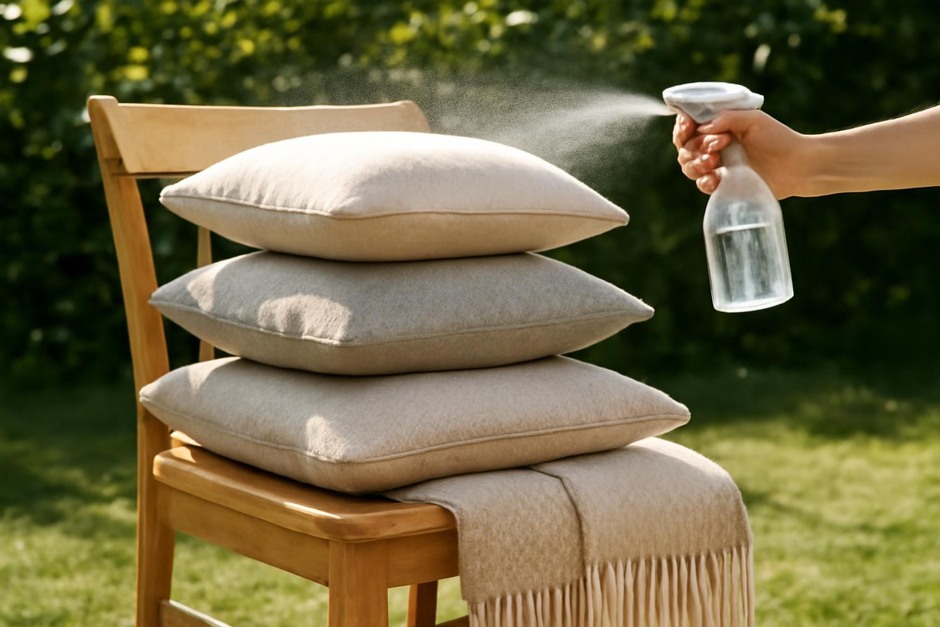
Question: What small, repeatable routine will keep cushions, throws, and other small soft items feeling fresher between full washes, without special equipment or much time?
Studio notes: process and plan
Purpose: a 15-minute, once-a-week or as-needed session to remove dust, reduce odors, and restore loft and drape. Tools: a soft brush or lint roller, upholstery or crevice vacuum attachment (optional), baking soda, a spray bottle with water (or a mild fabric refresher you make), mild soap, and a clean towel. Work somewhere with fresh air and sunlight if weather permits.
Step-by-step method (about 15 minutes)
- Collect and sort (1 minute): Gather cushions, throws, small poufs, and loose pillow inserts from the rooms you use most. Sort by fabric type (linen/cotton, wool, velvet, down/feather, synthetic).
- Shake and beat (2–3 minutes): Take each item outside or over a trash bag and give it a short, brisk shake to release dust. For sturdier covers and inserts, give a few gentle pats or light beats to lift trapped debris and restore loft.
- Vacuum or brush (3–4 minutes): Use a soft brush or upholstery vacuum attachment to sweep over woven fabrics, paying attention to seams and crevices. For delicate fabrics like velvet, brush gently with a soft garment brush along the nap.
- Freshen with baking soda where needed (2–3 minutes): For items with light, lingering odors, sprinkle a thin layer of baking soda over the surface, leave for 5–10 minutes while you continue with other items, then vacuum or brush away. If you don’t have a vacuum handy, work the powder gently into the fabric and shake it off outdoors.
- Spot clean small marks (2–3 minutes): Mix a teaspoon of mild soap in a cup of water. Dampen a clean towel and blot stains from the outside in. For delicate fibers, test on a hidden seam first. Avoid soaking; the goal is a targeted lift, not saturation.
- Air and re-shape (2–3 minutes): Prop cushions upright or lay throws over a railing to air for 10–20 minutes while you finish. Re-fluff inserts by giving them a few firm pats and folding into corners to redistribute filling. Zip or tuck covers back on and smooth seams.
- Final touch (optional, 30 seconds): Lightly mist a homemade refresher (water with a few drops of essential oil if you like) from a distance, keeping the spray fine and even. Avoid over-scenting; the goal is subtle freshness.
Review: what this routine achieves
After a few repetitions you’ll notice fewer visible dust clumps, a softer drape for throws, and loftier cushions. The routine removes surface dust and odors and extends the time between deeper cleanings. It’s also a gentle ritual—taking items outside and tending them by hand helps you be more aware of wear points and where deeper care is needed.
Variations
- Wool and felted fibers: Skip baking soda (it can be absorbed); prefer airing and gentle brushing. For pilled wool, use a fabric shaver or a careful hand trim.
- Down or feather inserts: Shake vigorously and re-fluff; if flattened, give a short tumble in a dryer with a dry towel on low heat for 10 minutes if care label permits.
- Velvet or delicate upholstery: Use a soft brush along the nap; avoid water-based spot treatment unless manufacturer guidance allows.
- Outdoor cushions: Hose off dirty covers and air in sun; remove covers and machine-wash if the label allows. Store indoors when wet for longer life.
- Quick seasonal refresh: Once a season, rotate cushions between rooms and launder removable covers to distribute wear and keep colors even.
Troubleshooting
- Persistent odors: For deeper smells (smoke, mildew), a longer baking soda treatment overnight in a sealed bag or a short machine wash of removable covers may be needed. Ensure full drying to prevent mildew.
- Stains that won’t lift: Identify fabric type and follow a dedicated stain-removal approach—oil-based stains need a different treatment than protein or dye stains. When in doubt, defer to professional cleaning for expensive or vintage pieces.
- Pilling or surface fuzz: Use a fabric comb or shaver gently; test first on a hidden area to ensure it won’t alter the look.
- Crushed or flat inserts: Fluff regularly and consider occasional full airing and tumble drying for down. If inserts consistently flatten, consider replacing with higher-resilience filling.
- Mildew or mold signs: Isolate the item, air it in sun, and clean per fabric instructions. If the smell persists after cleaning and drying, discard for health reasons.
Final note: This short routine is designed to be easily repeatable and forgiving. Over time it reduces the frequency of heavy laundering and keeps the small, everyday textiles in your home feeling cared for—little moments that quietly improve daily life.